Drift
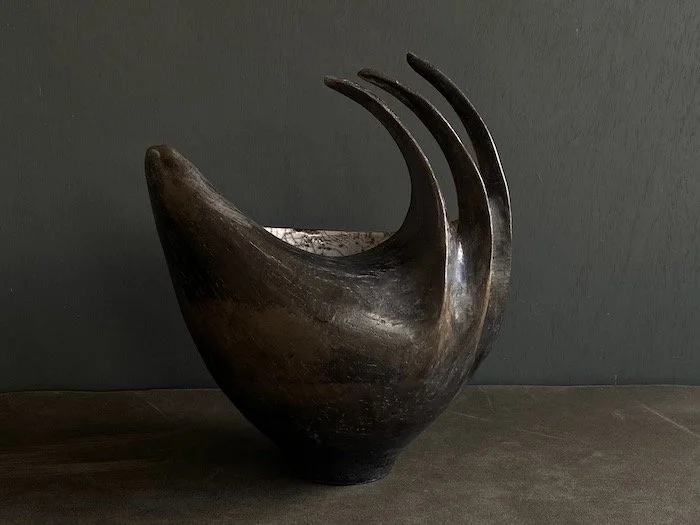
(A) Materials: Example here
(B) Photography: Credit to these people
(C) Sizes: Various sizes from 100 to 1000

2022
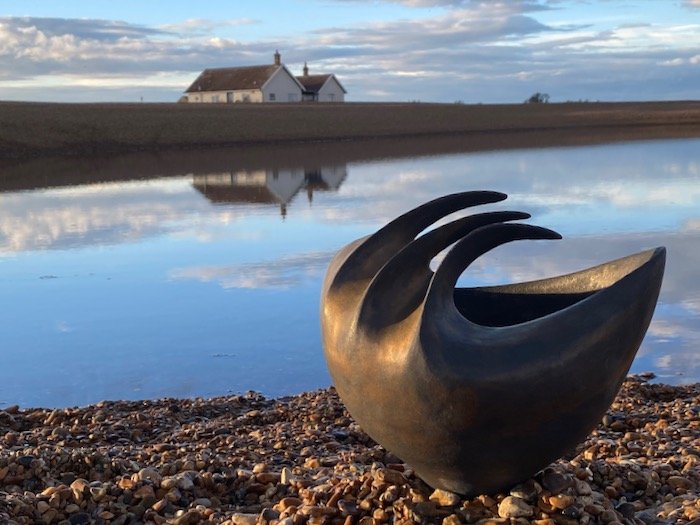


Drift is a series of pieces inspired by time spent at Shingle Street on the Suffolk coast. A shifting ephemeral landscape with enclosed lagoons formed by a cyclical process of the shingle moving both with and against the overall southward movement of the beach material. Despite its constantly shifting nature, some of the deposits of stones in this area of East Suffolk have been shown to have been in place for more than 8000 years.
The pieces are wheel thrown, altered and added to with coils and slabs. The largest enclosed forms below stand at 45cm tall.
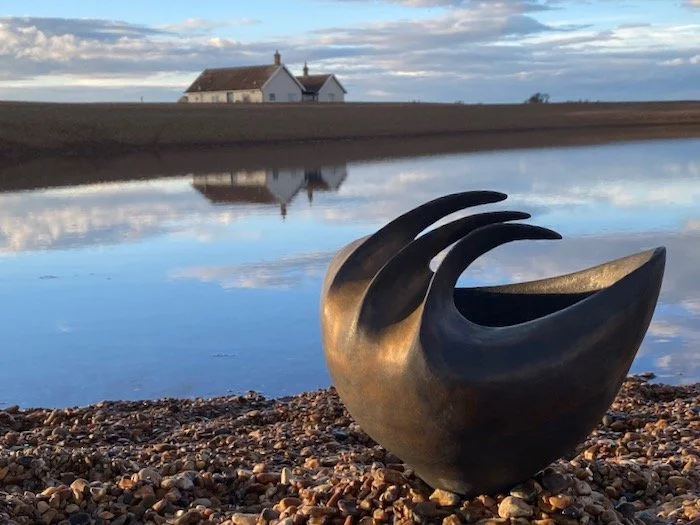
Available from this collection
Selected pieces from this collection are available to buy.

Dimensions: W 24m x H 36cm
Materials: Stoneware
Method: Wheel thrown, altered & added to
Description
a series of pieces inspired by time spent at Shingle Street on the Suffolk coast. A shifting ephemeral landscape with enclosed lagoons formed by a cyclical process of the shingle moving both with and against the overall southward movement of the beach material. Despite its constantly shifting nature,, some of the deposits of stones in this area of East Suffolk have been shown to have been in place for more than 8000 years.
Dimensions: W 24m x H 36cm
Materials: Stoneware
Method: Wheel thrown, altered & added to
Description
a series of pieces inspired by time spent at Shingle Street on the Suffolk coast. A shifting ephemeral landscape with enclosed lagoons formed by a cyclical process of the shingle moving both with and against the overall southward movement of the beach material. Despite its constantly shifting nature,, some of the deposits of stones in this area of East Suffolk have been shown to have been in place for more than 8000 years.
Dimensions: W 24m x H 36cm
Materials: Stoneware
Method: Wheel thrown, altered & added to
Description
a series of pieces inspired by time spent at Shingle Street on the Suffolk coast. A shifting ephemeral landscape with enclosed lagoons formed by a cyclical process of the shingle moving both with and against the overall southward movement of the beach material. Despite its constantly shifting nature,, some of the deposits of stones in this area of East Suffolk have been shown to have been in place for more than 8000 years.